The history of Jabo
The roots of Jabo Carpets go back to the early twentieth century, within the Dutch rope and fibre industry. The brand emerged from Verto N.V. (Vereenigde Touwfabrieken), an industrial group founded in 1919 and headquartered in Rotterdam. With locations in Maassluis, Leiderdorp and Kampen, Verto specialised in processing natural fibres such as coconut, hemp and sisal.

Between the 1920s and 1940s, Verto produced a wide range of fibre-based products, including binding rope, packing rope, fishing rope and towing cables for use in agriculture, shipping and industry. During this period, Verto also introduced runners and mats made from natural fibres, laying the groundwork for what would later become its flooring expertise.

Towards the end of the 1940s, the factory in Leiderdorp began experimenting with new applications for spun yarns. It became clear that these yarns were exceptionally well suited for producing floorcoverings. This development led to a major innovation in 1953: the introduction of the first wall to wall carpet made from sisal fibre. At the time, Verto employed around 1,800 people.
In that same year, the brand Jabo was established. A contraction of the name of Jan Bosman, then technical director at Verto. Jabo carpet quickly became a major success. Throughout the 1950s, this strong yet relatively coarse woven carpet could be found in nearly every household in the Netherlands. It was durable, functional and affordable. Perfectly suited to the postwar rebuilding period and the rapidly evolving home interior.

On 20 May 1954, Prince Bernhard visited Verto in Leiderdorp. Guided by technical director Jan Bosman, he was shown the production halls and informed about the various products and manufacturing processes.

From 1953 to 1975, Jabo grew into a leading brand in natural floorcovering. The collection expanded with new structures and colours based on natural materials such as coconut, seagrass and hemp. The characteristic woven appearance of Jabo carpets became a recognisable design feature in many Dutch interiors.

In 2009, the Hillfloor Group reintroduced and strategically repositioned the Jabo brand, with a strong focus on contemporary design, natural materials and a clear segmentation of the range. The relaunch centred on three conceptual collections: wool, synthetic and sisal. The well-known sisal rib was renamed Jabo 9421 — a timeless design that would grow into a true classic within the collection.

In 2023, Jabo Carpets introduced the Outdoor Collection: a series of rugs designed for versatile use, both indoors and outdoors. Made from weather-resistant materials, these rugs withstand moisture, UV exposure and intensive use. Their distinctive woven structures give the collection a refined, contemporary appearance — ideal for terraces, conservatories, entrances and any space where functionality and aesthetics come together.

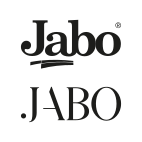
In 2024, Jabo underwent a complete rebranding. The logo received a modern and refined update, and the visual identity was fully redesigned. Natural tones now form the foundation of the brand identity, emphasising Jabo’s connection to nature and its craftsmanship. The result is a fresh, contemporary look that aligns seamlessly with the timeless quality of the collection.